Weather-Proofing Your Event Tent
Preparing Your Tent for All Conditions
Weather is the most unpredictable factor in any outdoor event. A properly weather-proofed commercial tent protects guests, equipment, and decor from wind, rain, sun, and temperature changes. This guide covers seasonal preparation strategies for each weather challenge.
Wind Protection
Wind is the most common cause of tent damage at outdoor events. Commercial frame tents rated to ASTM F3019-19 standards withstand at least 50 mph sustained winds, but proper setup is essential to achieve that rating.
- Install all anchor points: Never skip staking or ballast to save time. Every anchor point specified by the manufacturer must be used.
- Use sidewalls strategically: Solid sidewalls reduce wind load on the frame but can act as sails if not properly secured. Use wind-permeable mesh panels in high-wind conditions.
- Monitor wind direction: Position tent openings away from prevailing winds. Use weather apps to track real-time conditions.
- Reduce profile in exposed areas: Lower peak heights and remove decorative toppers in open fields where wind is unbroken.
- Have an evacuation plan: If sustained winds exceed the tent rating, evacuate attendees and lower the tent if possible.
Rain and Water Management
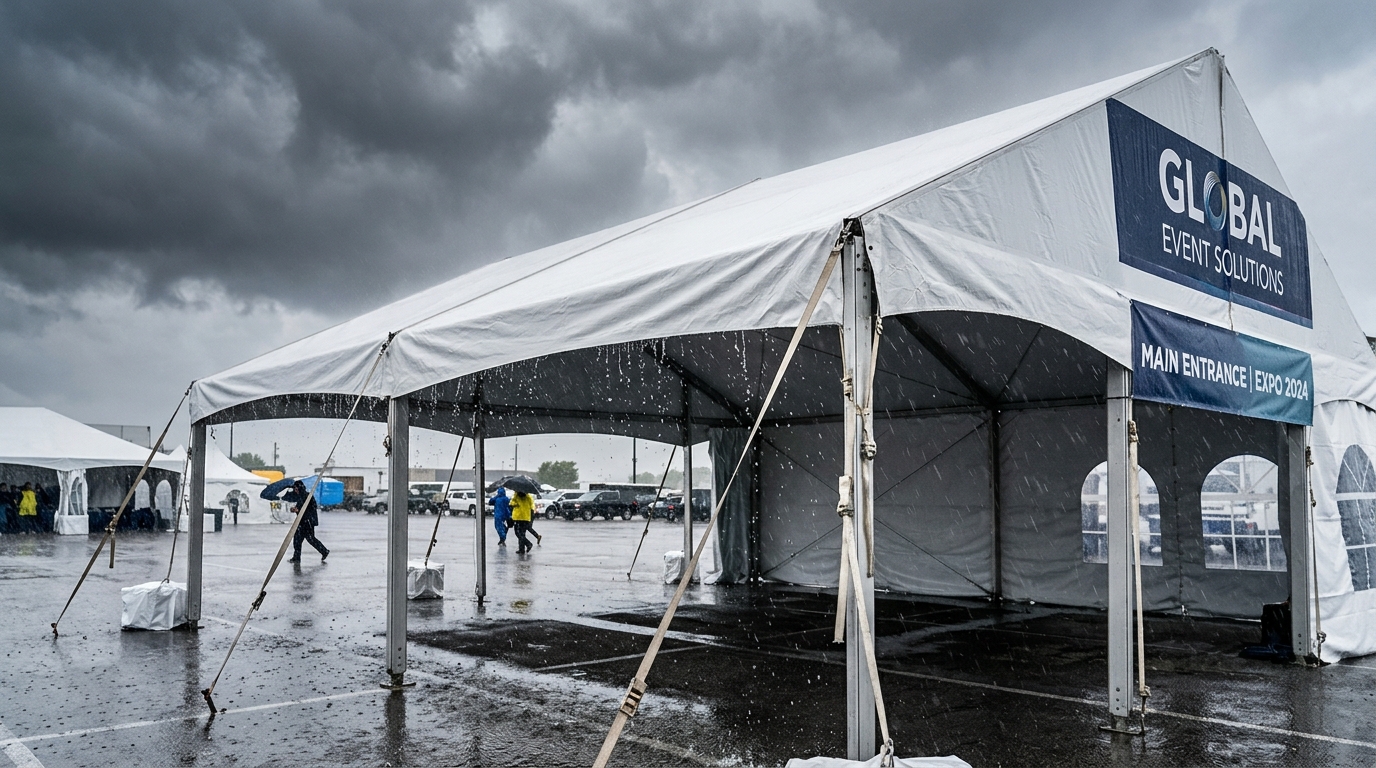
Rain can cause fabric sagging, pooling, and leaks. Proper tent setup prevents most water-related issues:
- Maintain proper tension: Fabric must be taut enough to shed water. Check tension after installation and adjust as needed during the event.
- Ensure adequate pitch: Tent roofs should have sufficient slope (minimum 15 degrees) to prevent water pooling. Clear span structures typically have built-in pitch.
- Install gutters for connected tents: When joining multiple tents, use rain gutters between sections to channel water away.
- Check fabric waterproofing: PVC fabric is naturally waterproof, but polyester fabrics may need periodic re-treatment with waterproofing spray.
- Manage runoff: Direct water away from entrances using ground grading or drainage channels. Avoid placing tents in natural drainage paths.
Sun and UV Protection
Prolonged sun exposure degrades tent fabric and creates uncomfortable conditions for guests:
- UV-resistant fabric: Choose PVC or UV-treated polyester fabrics. UV treatment extends fabric life from 3–5 years to 8–12 years.
- Use shade sidewalls: Mesh sidewalls block 70–80% of UV rays while maintaining airflow.
- Install cooling systems: Portable evaporative coolers or misting fans can lower interior temperature by 10–15 degrees in hot weather.
- Choose light colors: White or light-colored fabrics reflect heat. Dark fabrics absorb sunlight and raise interior temperatures significantly.
- Plan for afternoon sun: Position the tent so that the most-used entrance faces away from the afternoon sun direction.
Cold Weather and Winter Preparation
For cold-weather events, focus on heat retention and structural integrity:
- Install solid sidewalls: Enclose the tent to retain heat. Clear PVC window panels provide visibility while blocking wind.
- Use tent heaters: Indirect-fired heaters placed outside with ducting into the tent are the safest option. Always follow manufacturer clearance requirements.
- Prevent snow accumulation: Most commercial tents are not rated for snow load. If snow is expected, use a heated tent or plan for removal. Clear span structures with steeper roof pitches handle light snow better.
- Seal gaps: Use skirt panels and threshold seals to prevent cold air infiltration at ground level.
Seasonal Maintenance Schedule
| Season | Key Tasks | Inspection Focus |
| Spring | Clean fabric, check for winter damage, re-tension | Frame corrosion, fabric tears |
| Summer | UV inspection, ventilation setup, cooling prep | Fabric fading, seam integrity |
| Fall | Wind prep, sidewall installation, heater setup | Anchor points, strap condition |
| Winter | Snow monitoring, heated enclosure, structural checks | Snow load, frame stress |
Emergency Weather Kit
Keep these items on-site during any event:
- Extra ratchet straps and stakes
- Roll of repair tape (Tenacious Tape or equivalent)
- Portable weather radio or weather app with alerts
- Emergency contact list for tent crew
- Spare sidewall panels
- Flashlights and extra batteries
Need Weather-Ready Tents?
Our commercial tents are designed for year-round outdoor use with weather-resistant fabrics and wind-rated frames. Browse Heavy-Duty Frame Tents or Commercial Tent Fabric for options.
For weather-specific recommendations, contact us at +1 (650) 393-5886 or email info@commercialeventtents.com.