Commercial Tent Anchoring Best Practices
Why Proper Anchoring Is Critical
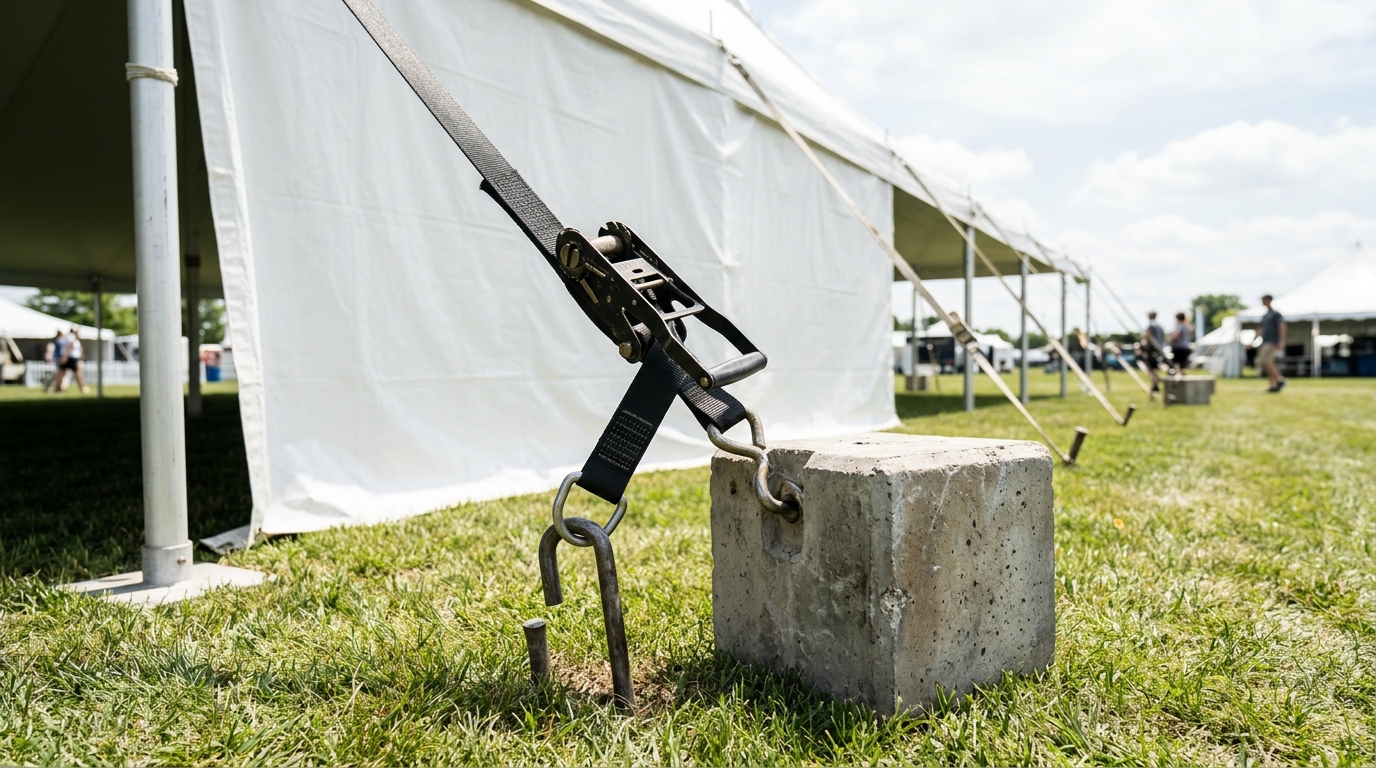
Anchoring is the single most important safety factor for any commercial event tent. Improperly anchored tents can shift, collapse, or become airborne in high winds, creating serious safety hazards for attendees. Every commercial tent installation must follow manufacturer specifications and local building codes for wind load and structural stability.
Anchoring Methods by Surface Type
The anchoring method you use depends on the ground surface at your venue:
Grass and Soil Surfaces
Staking is the most common and effective method for grass and soil installations.
- Heavy-duty steel stakes: 30–42 inches long, driven at a 45-degree angle away from the tent. Use 2–4 stakes per anchor point depending on tent size.
- Stake depth: Minimum 24 inches for tents up to 40 ft span; 36+ inches for larger structures.
- Stake spacing: Place stakes 3–5 feet from the tent base at 45-degree angles.
- Soil assessment: Soft or sandy soil requires longer stakes or additional anchors. Hard clay may need pre-drilled holes.
Concrete and Asphalt Surfaces
When staking is not possible, use weighted anchoring systems:
- Concrete blocks: 250–500 lb blocks positioned at each anchor point. Use engineering calculations to determine required weight per anchor.
- Water barrels: Filled 55-gallon drums (approximately 460 lbs each). Secure with ratchet straps to tent frame anchor points.
- Sandbag anchors: 50–100 lb sandbags stacked at base plates. Common for smaller frame tents on hard surfaces.
- Surface-mounted brackets: Bolt-down base plates for semi-permanent installations on concrete pads.
Decking and Raised Platforms
For elevated installations, use engineered mounting brackets secured to the deck structure. Consult a structural engineer to verify load capacity.
Hardware and Equipment Checklist
| Item | Specification | Typical Use |
| Steel stakes | 30–42", 5/8" diameter | Grass/soil anchoring |
| Ratchet straps | 1–2" wide, 3,000+ lb WLL | Securing frame to anchors |
| Concrete blocks | 250–500 lbs each | Hard surface ballast |
| Water barrels | 55-gallon, ~460 lbs filled | Hard surface ballast |
| Tensioning tools | Strap tighteners | Proper tension on guy lines |
| Load-rated hardware | Forged, not cast | All connection points |
Wind Load Considerations
Commercial tents should be rated for specific wind speeds. The ASTM F3019-19 standard requires commercial frame tents to withstand at least 50 mph sustained winds. For events in areas prone to higher winds:
- Use additional anchor points beyond the minimum specification
- Install wind panels and sidewalls to reduce wind load on the frame
- Monitor weather forecasts and have an evacuation plan for winds exceeding the tent rating
- Consider reducing the tent profile by lowering peak height in exposed locations
Site Assessment Before Installation
Before setting up any commercial tent, conduct a thorough site assessment:
- Check for underground utilities: Call 811 (US) before driving stakes to avoid hitting gas, water, or electrical lines.
- Identify overhead hazards: Power lines, tree branches, and building overhangs must be cleared.
- Assess soil conditions: Test soil density and composition to determine appropriate stake type and depth.
- Verify surface flatness: Level ground within 2 inches across the tent footprint for proper frame alignment.
- Check drainage: Avoid low-lying areas where water can pool during rain.
Inspection During the Event
Anchoring is not a one-time task. Assign a crew member to inspect anchor points, strap tension, and frame stability at regular intervals throughout the event. After any significant weather event (heavy rain, strong winds), perform a full structural inspection before allowing attendees back inside.
Need Anchoring Equipment?
View our Heavy-Duty Event Tent Accessories for anchoring kits, stakes, and hardware. For site-specific anchoring guidance, contact us at +1 (650) 393-5886 or email info@commercialeventtents.com.